Who we serve
Physician & medical groups

Your clinicians work in one system. Their schedules, credentials, and payroll finally do too.

With analytics that run on the same data. No exports. No lag. No guessing.

Physician and medical groups run on spreadsheets, inboxes, and tools that do not talk to each other. The gaps get expensive: a slipped start date means weeks of premium external coverage, and an expired license can cost $8,000+ per missed shift. Kimedics is the clinician workforce operations platform built by healthcare operators: onboarding, scheduling, credentialing, time, and pay in one workspace.
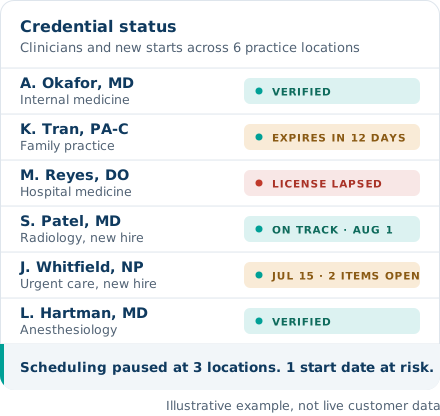
Credential status board showing six clinicians across six practice locations, with verified, expiring and lapsed statuses
$8K+ Per missed shift Lost revenue and coverage cost when a single shift goes unfilled
23% Less external coverage spend Average reduction in external coverage spend within the first year on Kimedics
800+ Healthcare organizations Plan and run their day-to-day workforce operations on Kimedics

Four challenges that never stop in a multi-site practice group

Ask the workforce operators inside any practice management group, and the same four challenges come up. None of them ever finish. Every new location makes them harder.

01

Hired on paper, delayed in practice

Growth plans assume new clinicians start on time. The operations themselves are rarely the problem. Credentialing, privileging, and licensing each get done; the teams doing them are just not in sync, with no shared view of where things stand, who owns the next step, or what has already been done. Start dates slip because nobody sees the delay forming. Expirations lapse because no record shows what changed, when, and by whom.

02

Scheduling in silos

Coverage decisions get made without a complete picture of who is available, credentialed, and deployable across the group. The best schedule needs more than the roster: real-time utilization and capacity, where each clinician is licensed to work, and the hours already logged across every site. Without that view, groups push clinicians past sustainable workloads, cross pay thresholds before finance sees the cost shift, and reach for outside help earlier than necessary, without knowing what each added shift actually costs.

03

Vendor management

When internal coverage falls short, the gap moves to a staffing partner. Most groups run several vendor relationships at once, each with its own submission process, rate structure, and communication trail, with no central view of who has been sent, who is credentialed at which site, or which agencies consistently deliver. The patterns never surface: which sites lean on outside help most, which relationships drive the most cost, whether external coverage fills real gaps or masks a scheduling problem.

04

Timesheets meet payroll

Approved hours reconcile against contracted rates, shift differentials, and RVU-based pay. When that happens by hand, approval is an investigation instead of a review. Finance finds out about problems after the money moves, vendor spend accumulates before anyone holds a consolidated view, and whether internal coverage cost less than outside help goes unanswered.

The whole picture, months ahead

Coverage, credential readiness, and onboarding start dates read months out, instead of living in several systems and spreadsheets.

  • See new-start readiness against the dates your growth plan assumes
  • Track open shifts across the whole organization, not site by site
  • Plan external coverage ahead of need instead of paying for surprises
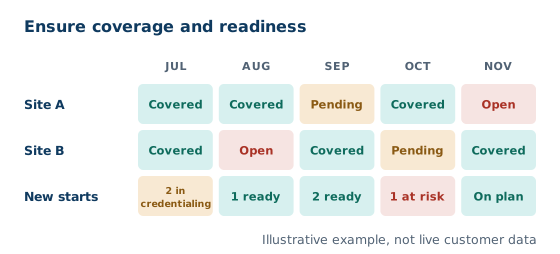
Coverage and readiness grid reading July through November across two sites and new starts

From approved shift to financial picture

Because rates, schedules, and time live in the same system, the financial picture builds itself.

  • Set granular shift-level rates once; timesheets tie directly to shifts, so approval is a review, not an investigation, and pay statements and client invoices generate from approved time with no re-keying
  • Real-time dashboards show schedules, staff utilization, spend tracking, and premium pay across the organization
  • Forecast where internal capacity runs short so external coverage becomes a budgeted decision, not a surprise expense
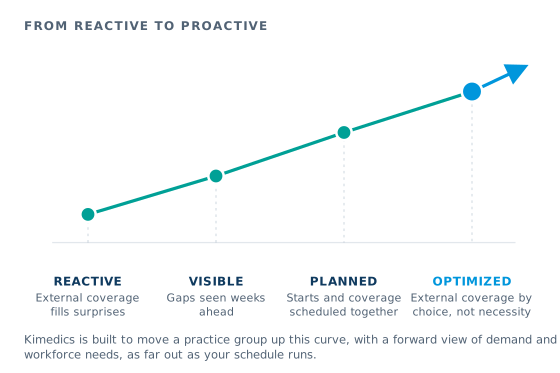
Maturity curve moving from reactive to visible to planned to optimized coverage

How a practice group runs its week on Kimedics

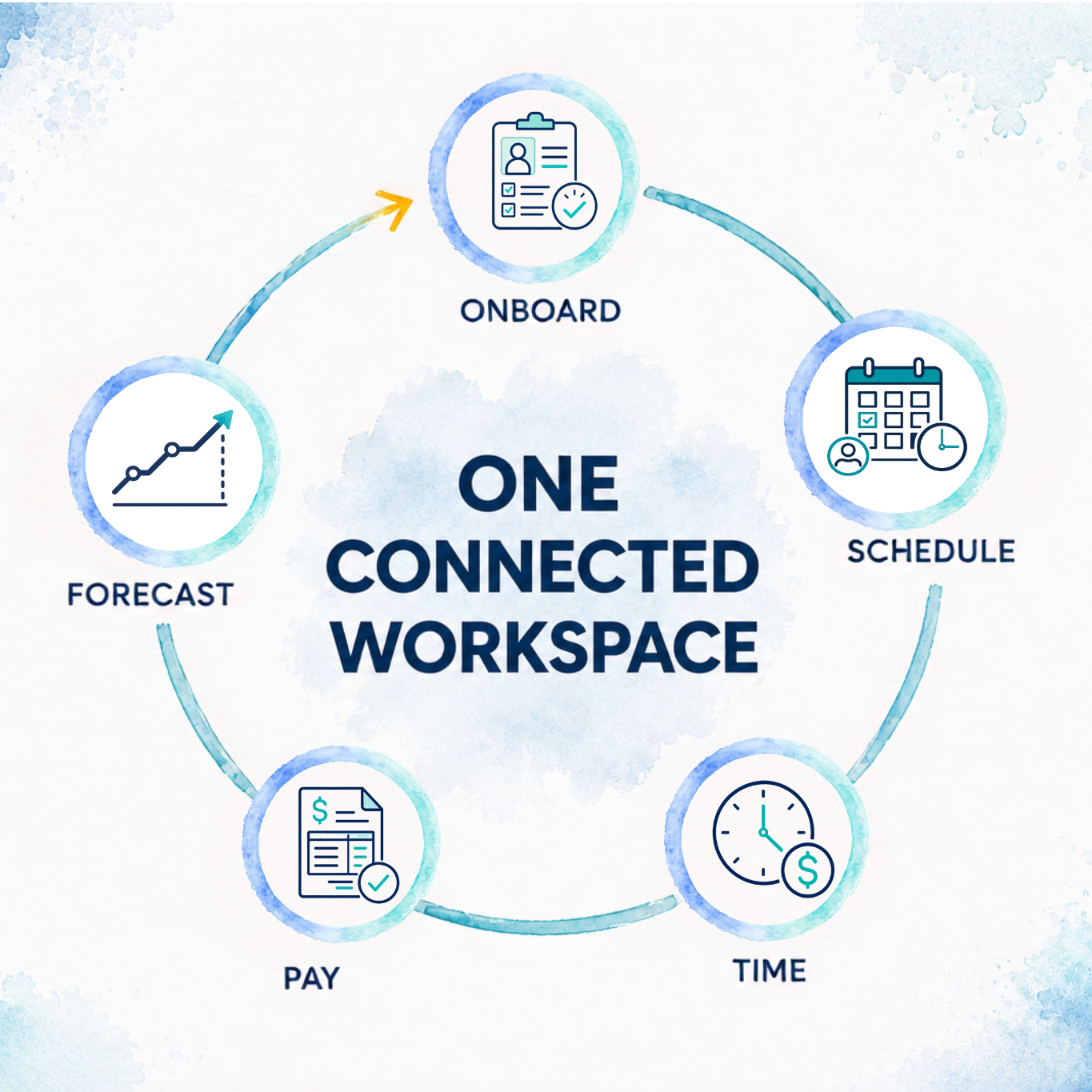
Five connected workflows, in the order your operation already moves. Each one configured to mirror how your practice actually runs.

ppm-flow-onboard

Onboard and credential

ppm-flow-schedule

Onboard and credential

ppm-flow-time

Capture and approve time

ppm-flow-pay

Pay and bill

ppm-flow-forecast

Forecast and report

How we're different

Work from the same picture as everyone who covers you

Kimedics is the one platform built to bring practice groups, the facilities they cover, and the staffing partners they use onto the same data, the same workflows, and the same live status.

No more reconciling one system against another

When the facilities you cover and the staffing partners you use work in Kimedics, you are not emailing credential files or working from a schedule that does not match theirs. Every side sees the same coverage, the same credential status, the same approved hours.

Independent, and built for both directions

Kimedics is not owned by a staffing agency and it does not put you on one side of a marketplace. A practice group buys external coverage and supplies clinicians under contract, often in the same week, and both directions run in the same workspace.

I can rest easy knowing that we are not missing credentials that are expiring, and I love the fact that we can run payroll so easily.COO, CCM/HM group
The main reason I would recommend Kimedics is because it's the home base for everything a medical group would need.Admin, 100+ physician group
Kimedics is extremely responsive. Even for minor questions they are helpful and respond as if it is a top priority.Coordinator, medical group of 75 clinicians
Kimedics has been a tremendous business partner to our organization.COO, telemedicine radiology group
FAQ

Questions practice groups ask

Does Kimedics work for physician practice management groups as well as health systems and staffing agencies?

Yes. All three are first-class users. A practice group, the facilities it covers, and the staffing partners it uses can work from the same data, the same workflows, and the same live status, so coverage and credentialing stop living in separate systems on each side of the relationship.

What is Kimedics for a practice management group?

Kimedics is the clinician workforce operations platform built by healthcare operators. For a practice group it brings onboarding, credentialing, scheduling across locations, time, and pay into one workspace, with analytics that run on the same data instead of on an export.

How is Kimedics different from our practice management system or EMR?

Your practice management system and EMR run the patient side: encounters, claims, and the revenue cycle. Kimedics runs the workforce side: who is credentialed, who is available, who is scheduled where, what they worked, and what it cost. The two answer different questions, and most groups run both.

Can Kimedics handle multiple locations, entities, and pay models?

Yes. Rates are set at the shift level, so hourly, shift-based, differential, and RVU-based pay can run side by side across locations and legal entities. Each site carries its own credential requirements, and coverage reads across the whole group rather than one location at a time.

How does Kimedics keep a new physician's start date from slipping?

By making the delay visible while there is still time to act. Credentialing, privileging, and licensing steps sit in one shared view with an owner and a due date on each, so readiness reads against the date your growth plan assumes rather than surfacing as a surprise the week before.

How does Kimedics show what a shift actually costs?

Because rates, schedules, and time live in the same system, cost attaches to the shift as it happens. Approved hours reconcile against contracted rates and differentials automatically, so finance sees premium pay and external coverage spend as it accrues instead of after the money moves.

Walk us through your week

Tell us how your week runs. A 30-minute conversation about how your practice manages scheduling, credentialing, time, and pay is enough to show you where Kimedics fits and what changes when it does.

Book a 30-minute call